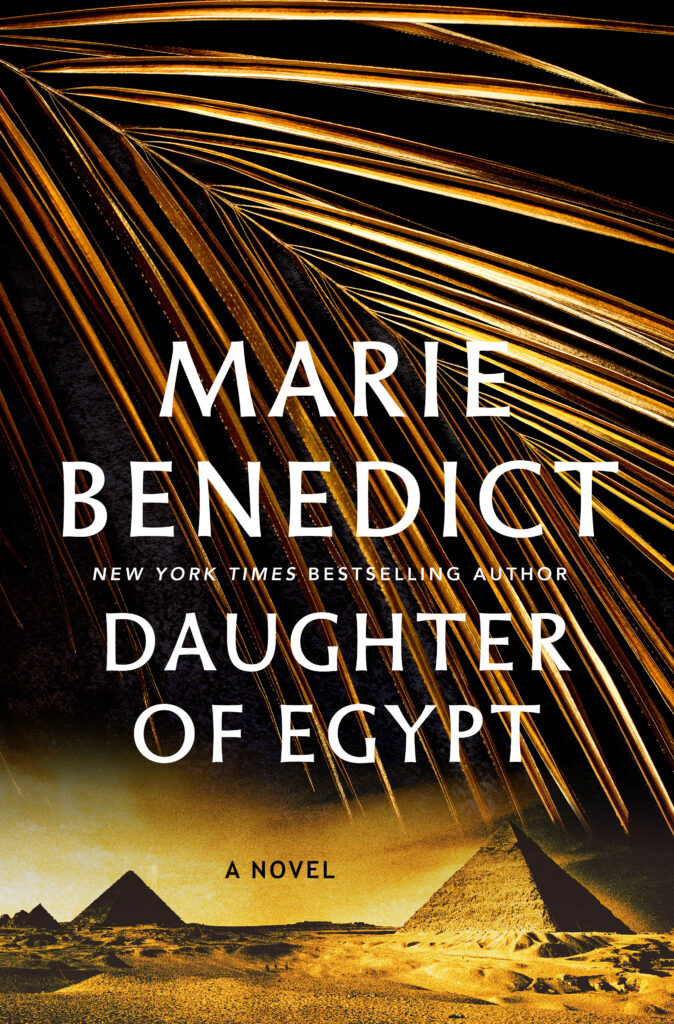
Known for her “delightful blend of historical fiction and suspense” (People), New York Times bestselling author Marie Benedict, returns with a sweeping tale of a young woman who unearths the truth about a forgotten Pharaoh—rewriting both of their legacies forever.
Author Marie Benedict expertly weaves between ancient Egypt and 1920s England/Egypt, telling the stories of two uniquely different women. Queen Hatshepsut, who ascended the throne during a time when women were governed by the rules of their fathers, and given only the roles that society deemed acceptable, and Lady Evelyn Herbert, who dreams of finding the final resting place of Egypt’s forgotten queen.
In this Q&A, Benedict shares when her own interest in Hatshepsut first began, what it was like getting into the minds of women born thousands of years apart, and what it was like following in their footsteps as she traveled to the locations featured in the book.

When did you first come up with the storyline (and the two heroines featured in its pages)?
For as long as I can remember, I’ve been intrigued by ancient Egypt and one of the only female pharaohs, Hatshepsut. But the seed for this story only began to grow when I learned that Lady Evelyn Herbert of Highclere Castle’s tutor in archaeology had been Howard Carter, the very same person who’d meticulously studied and sketched Hatshepsut’s mortuary temple in Luxor, Egypt, and discovered her unfinished cliff tomb to the west of the Valley of the Kings. What if, I hypothesized upon discovering this, Lady Evelyn Herbert and Howard Carter shared my own passion for discovering Hatshepsut’s secrets? And what if, as they set out to discover the tomb of Tutankhamun, they were also hunting for the tomb of Hatshepsut? From this, Daughter of Egypt was born.
During your research for the book, what was one of the most interesting facts you learned about both Lady Evelyn Herbert and Hatshepsut?
During my research for the book, I was fortunate enough to travel both to Highclere Castle in England and Egypt. While I’d been fascinated with Hatshepsut for some time, I found it captivating to actually see first-hand the incredible monuments she constructed in Luxor, Egypt — her mortuary temple and the Red Chapel in the Karnak Temple complex, in particular — and especially to see the physical examples of her images being chiseled out of those monuments. It really brought home her erasure from history. With Lady Evelyn Herbert, it was so meaningful to walk where she walked at Highclere Castle and explore where she explored in the Valley of the Kings and stay where she stayed at the Winter Palace in Luxor. It brought her alive.
Which time period from the book did you enjoy writing the most?
I absolutely adored writing about both ancient Egypt — Hatshepsut’s reign in particular — and the post-World-War I era of archaeology. Both are so crucial and compelling that it’s impossible to choose!
What was it like getting inside the ‘minds’ of these two women?
Fascinating and challenging, particularly in the case of Hatshepsut. I’d written a few other pieces about women in the interwar time period, and while no two women are alike, there were certain similarities in experiences, settings, and world events that made accessing Lady Evelyn Herbert’s inner self a bit easier. The world of ancient Egypt, by contrast, was quite different than our own, especially for women of the ruling class whose existences were governed by rituals and expectations. Fortunately, I consulted with incredible Egyptologist, Dr. JJ Shirley, and she helped me access Hatshepsut’s world, in addition to my own research.
If you could have met either (or both) of the women, what would you have asked them?
If I could ever have the privilege and honor to meet either one of these women, I would ask them the question I have of all the women I write about: did I get the story right?
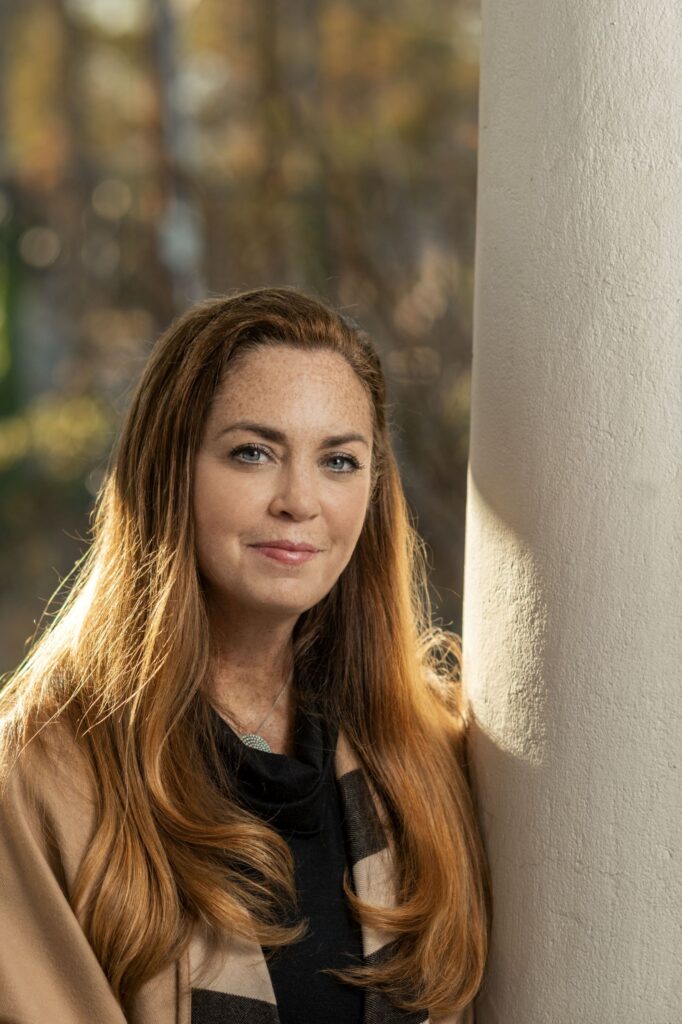
Author Bio —
Marie Benedict
Marie Benedict is a lawyer with more than ten years’ experience as a litigator at two of the country’s premier law firms. She found her calling unearthing the hidden historical stories of women. Her mission is to excavate from the past the most important, complex and fascinating women of history and bring them into the light of present-day where we can finally perceive the breadth of their contributions as well as the insights they bring to modern day issues.
She is the New York Times and USA Today bestselling author of The Queens of Crime, The Mitford Affair, Her Hidden Genius, The Mystery of Mrs. Christie, The Only Woman in the Room, Lady Clementine, Carnegie’s Maid, The Other Einstein, and the novella, Agent 355. With Victoria Christopher Murray, she co-wrote the Good Morning America Book Club pick The Personal Librarian and the Target Book of the Year The First Ladies.
With Courtney Sheinmel, she released the first book in a a middle grade historical adventure series, entitled The Secrets of the Lovelace Academy.
Her books have been translated into thirty languages and selected for the Barnes & Noble Book Club, Target Book Club, Costco Book Club, Indie Next List, and Library Reads List.
Up next is her March 24, 2026, release, Daughter of Egypt, a sweeping tale of Lady Evelyn Herbert of Highclere Castle who unearths in Egypt the truth about a forgotten female Pharaoh — rewriting both of their legacies forever.