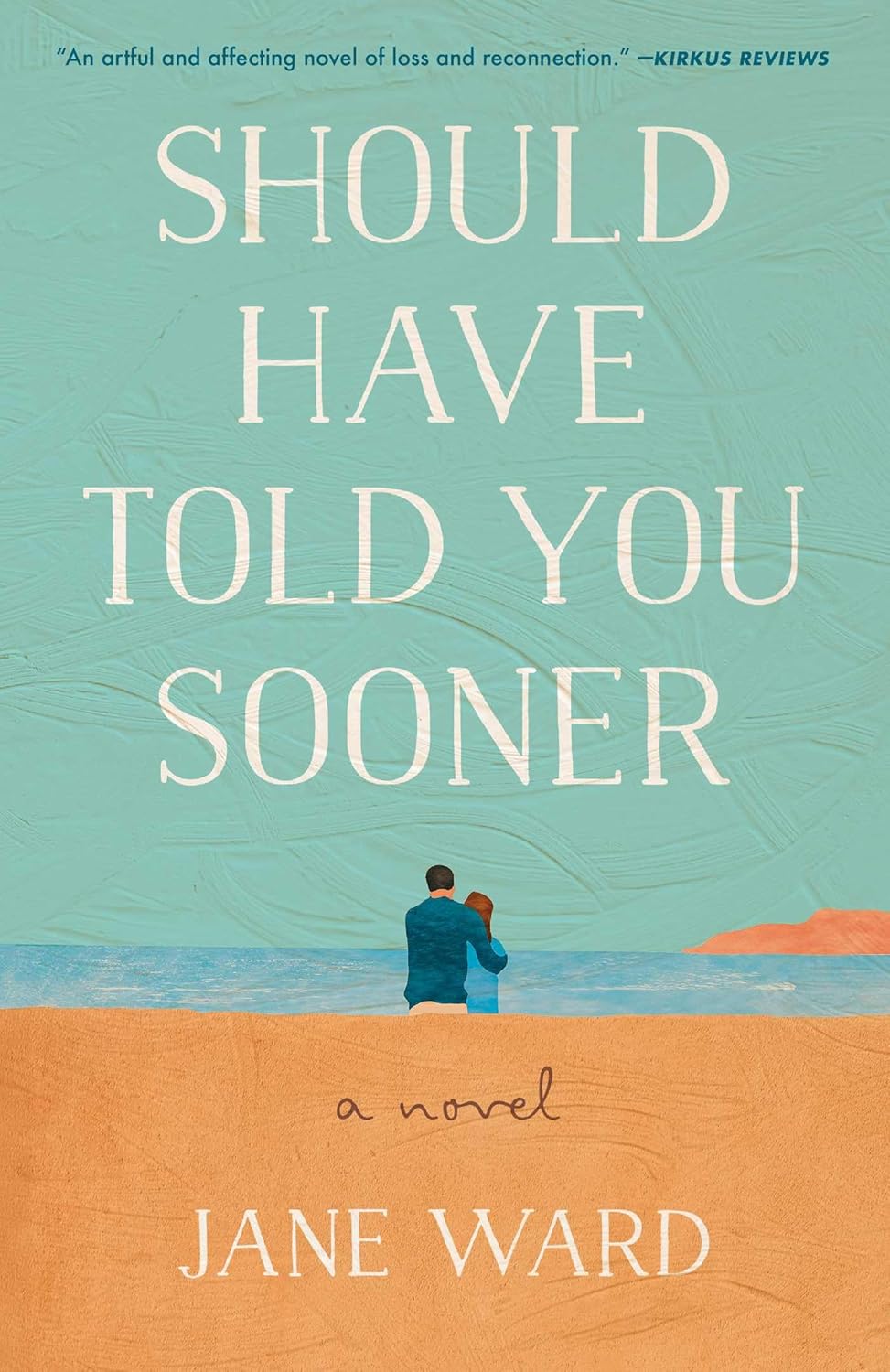
This is the first novel that I have read by author Jane Ward, and while it is not a murder mystery or suspense novel like my usual reading, it takes place in London and in the world of art, which will always be two big draws for me. Taking place between thirty years in the past, and the present day, this novel is told from three separate points of view. The first from an son to a mother he has never known, the second an aspiring curator, who has returned to London on a 6 month ‘secondment’ where she prepares for a exhibition at a gallery featuring aspiring young artists, and Bryn Jones, a now disenchanted artist who lost the love of his life thirty years previously, and due to arthritis may be loosing his ability to paint altogether.
Through this story of love and loss, we find redemption and the chance at second chances, and I’m so excited to be able to share this Q&A with the author, Jane Ward.

When did you first come up with the storyline for Should Have Told You Sooner?
The beginnings of the story came to me in the spring of 2020. As you can tell from the date, this was the height of Covid lockdown. I was living in Chicago at that time and would take my two dogs out for very early walks through our neighborhood of Edgewater. I had just turned in my previous novel – it was in the pre-publication editorial process – and to keep myself occupied I spent those early mornings thinking about what I’d write next. One day I passed one of those school graduation announcement signs, the ones proud parents put up to celebrate their child’s milestone. It read something like “Congratulations, Henry, on your graduation from the Bell School!” As I walked, I kept repeating, “Henry Bell” and realized it felt like a character name. I began to imagine who Henry would be, and from there, the story took off.
What led you to setting the novel primarily in London?
Well, I love to travel, and at the time I started writing, travel was impossible. Part of me wanted to live vicariously through writing about a favorite place, I suppose, so it was both a bit of wishful thinking and a bit of a love letter to a place I hold so dear and missed. Luckily, it also worked from a plot perspective. I needed to get Noel out of the custody situation she was never going to win and into a place that might prompt her to start being honest with herself about her past.
Tell me about your research process, what was the most interesting find you made during the process.
There was a lot of research involved, everything from UK adoption laws to Welsh landscape artists! But it was writing about fictional pieces of art that was both the most thrilling and challenging thing I had to do. I’m not a visual artist, but I let my imagination take off when describing Bryn’s and Henry’s artwork. However, always in the back of my mind was making sure I understood how these pieces of art were made. I had a specific technique in mind for Henry’s work but I had no idea how to accomplish it. Fortunately, I met a Massachusetts artist, Sue Fontaine, who uses a similar technique in her work. She let me spend a day with her in her studio. I watched and asked questions to make sure I was getting all the details right. Being in that studio as the beneficiary of Sue’s generosity was so special.
Which museum or museums is the Addison based on?
The Addison Gallery is an imaginary mash up of London’s Courtauld Institute of Art and the Saatchi Gallery with a dash of Tate Britain prestige thrown in.
Going into writing the book, did you already know how everything was going to be revealed, or did you see how the character’s/story lead you?
I don’t outline, but I did have a very clear idea of what I wanted to happen at the very end of the book and wrote toward that. But as I wrote, each character let me know what they would do to get there.
Of the three POV’s which character did you feel drawn to the most? (Noel, Bryn or Henry)
They are all so dear to me after months of spending time with them. But I have a special empathy for Noel. She’s so much like all of us – longing for a certain life, trying to do the right things, thinking that by moving forward we can outrun bad decisions, but having to reckon with them eventually. Noel feels very messy and authentic to me.
What scene did you enjoy writing the most/and or was the hardest to write?
I always struggle with the big emotional scenes. Sometimes I have to write something superficial and then take a break with a plan to go back later and dig deeper. That said, when the emotion finally feels right and I can say, “yeah, that’s it,” it’s such a joy. I went through this exact process when writing the last scene and it still makes me gasp when I re-read it.
If you could have met any of your characters, who would you want to meet the most?
At a recent book launch event, several of us there who knew the book decided we all wanted a best friend like Cal. He’s loyal, he’s the friend who isn’t afraid to speak his mind, and he’s also not afraid to be vulnerable himself.
Are you working on your next novel and if so, can we get a sneak peek?
There are more stories to tell and loose ends to attempt to tie up regarding the cast of characters from Should Have Told You Sooner. So I’m about 45000 words into the sequel. The opening scene focuses on a character the readers haven’t met yet but who will play an important role in this follow up. Here are the first two paragraphs:
“Faith Jones sat at the lunch table in the break room. She stared into space, a piece of stationery laid out in front of her, awaiting her signature. Her hand holding an ink pen hovered above. There was an envelope too, a small padded one already addressed. All she had to do was sign her name to this last page, place it on top of the pages she’d torn out of her diaries, tuck in the photos she’d brought along as proof, and put it all in the parcel, ready it for the post. And yet here she was, hesitating.
When she first had the idea to mail this record of her young, misspent life, she’d been determined and in high spirits that it would all be–finally–off her chest. But while writing the accompanying letter, she’d felt the energy drain from her with every stroke of the pen. She couldn’t blame this malaise on her work. Her day mucking about the place was no busier than usual, and besides, she only worked mornings now, seven until eleven, and only three shifts each week. She was seventy-two, still working, although by rights she might have been dead long ago. That was probably why she kept on working, to celebrate that she still could. That, and her colleagues were very accepting of her, despite her past mistakes.”