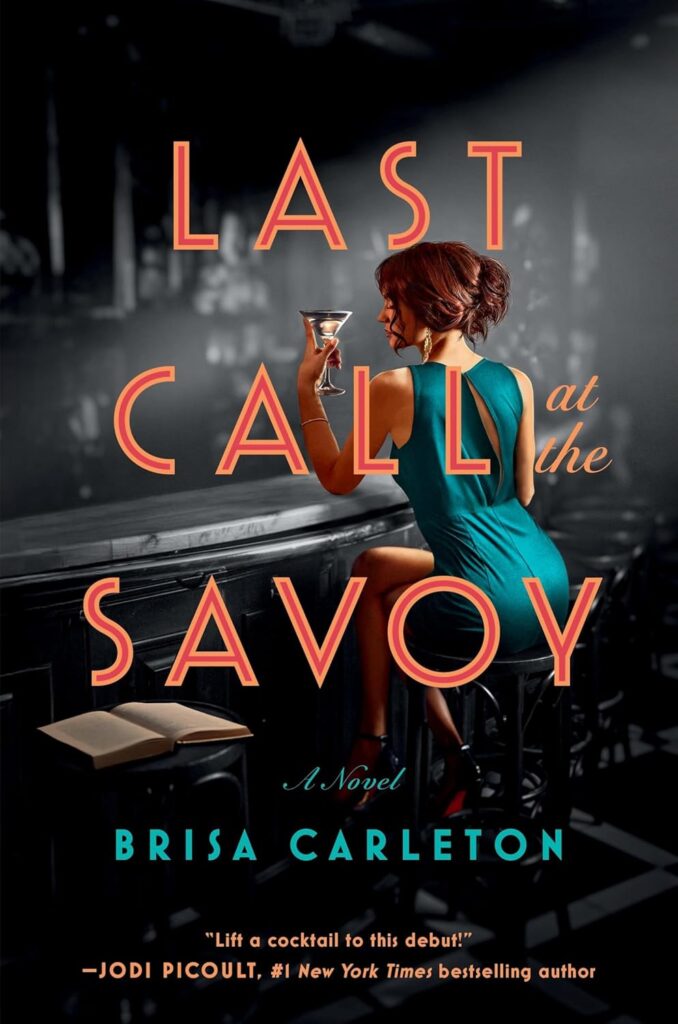
After losing her parents six years ago, Cinnamon Scott feels like she’s become stuck. Instead of writing, she copes with her parents’ deaths with an endless string of men and parties she’ll never remember. When her older sister Rosemary calls her to come to London (she’s expecting twins and put on bed rest), Cinnamon rushes to her sister’s side at The Savoy, where she’s staying while her new London home is being renovated.
With little to occupy her evenings, she discovers the famed American Bar, where the late shift bartender tells her the story of Ada Coleman, the true genius behind the cocktail recipes in the well-known handbook released by the hotel a century ago. Wondering why Ada’s name is not listed anywhere in the book, she’s determined to learn the true story of what happened to her and why she seems to have been lost to history.

When were you first inspired to write Last Call at the Savoy?
The idea hit me at The Savoy’s American Bar in London (martini in hand, naturally). I learned from a footnote on the cocktail menu that the first head bartender had been a woman, Ada Coleman, once world-famous and then largely forgotten. As someone who’s worked in male-dominated industries, I couldn’t stop thinking about her. That spark grew into a story that connects a modern-day woman trying to reinvent herself with the trailblazer who mixed history’s most famous cocktails.
When did you first learn about Ada Coleman, the true creator of cocktail recipes featured in the Savoy’s cocktail book?
That night at the bar was my introduction, but once I started digging, I fell down the most glamorous rabbit hole imaginable. Ada helped shape modern cocktail culture, yet when The Savoy Cocktail Book came out, her name had vanished. It felt like the perfect mystery to pair with a modern heroine who’s also figuring out how to be seen.
Tell me about your research process for the book, and the most exciting discovery you made during that process.
I split my time between history and happy hour! Seriously. I read century-old bar manuals and also talked with contemporary mixologists about how the craft has evolved. I spent a lot of time at The Savoy, where the staff was always incredibly warm and welcoming. They’ve been so supportive during this whole process. It’s also a testament to The Savoy’s reverence for its storied past that they keep a full-time archivist on staff, who was also helpful. But much of Ada’s story had to be found between the lines of what had actually been recorded in the history books.
At what point, when you were coming up with your idea for the book, did you decide on the fictional sisters’ names?
Cinnamon came to me first. She’s bold, unconventional, and just a little bit spicy. Since I knew it was a bit unusual, I created a backstory that her parents had owned a famous bakery chain, which left me looking for the perfect name for her sister, Rosemary. It’s been fun to see readers have such strong reactions to the names. They either love it or hate it. But I did hear from a baby name book publisher that they are adding Cinnamon to their list!
What was it like going from working on Broadway shows to writing Last Call at the Savoy?
In some ways, it felt like a natural transition. Producing Broadway is all about storytelling, shaping emotion, pacing, and rhythm, and a novel requires that same sense of drama and timing. The difference is that when you’re writing a book, there’s no cast or crew to hand the baton to. It’s just you and the page. Having been through the development process of so many musicals, especially helped me in the book editing process, where things get collaborative. I’ve seen firsthand how drastically a musical can change on its way to opening night. Whole scenes are rewritten, songs swapped out, characters reimagined. All too often, expensive, beautiful sets or costumes are scrapped overnight in the service of improving the overall show. Compared to that, revising a novel feels mercifully simple. At least on the page, you only have to kill words, not entire wardrobes.
Which character’s storyline did you enjoy writing the most: Ada’s, Cinnamon’s, or Rosemary’s?
Ada’s story was the heartbeat of the book. I felt protective of her, wanting to do her justice. But Cinnamon was the most fun. She’s messy, impulsive, and funny in the way people are when they’re trying to figure out who they are. Writing her voice felt like shaking a cocktail, chaotic at first, then unexpectedly balanced. And the Cinnamon/Rosemary sister story made me wish I had a sister of my own!
Without giving anything away, which scene was the most difficult to write?
The book flips between Cinnamon in modern day and vignettes of Ada Coleman in the early 1900s. The hardest thing for me was choosing which snippets of Ada’s story to flash back to. I could have written an entire book about just her, but that wasn’t what this was. It was hard to choose from all the Ada stories, celebrity visits, and events of the time which to include and which to leave out.
If you could have met Ada in real life, what would you have asked her?
I’d ask if she’d invite me to one of her famous cast parties. In addition to ruling the American Bar, she supposedly threw legendary parties for the casts of the Savoy Theatre shows at her house. She sounds like so much fun!
If the book were turned into a Broadway play or a feature film, who do you imagine in the main roles?
For Ada, someone magnetic and grounded: Claire Foy or Carey Mulligan. For Cinnamon, Anna Kendrick or Sara Waisglass. And for Rosemary, Alexandra Daddario would bring the perfect quiet depth.
Are you working on your next novel, and if so, can we get a sneak peek?
Yes! My next book, Champagne Problems, follows a woman who inherits a fading Manhattan champagne bar and uncorks secrets that take her to the vineyards of France. It’s another blend of history, reinvention, and a few bubbles, because life’s biggest questions are still best asked over a beverage.
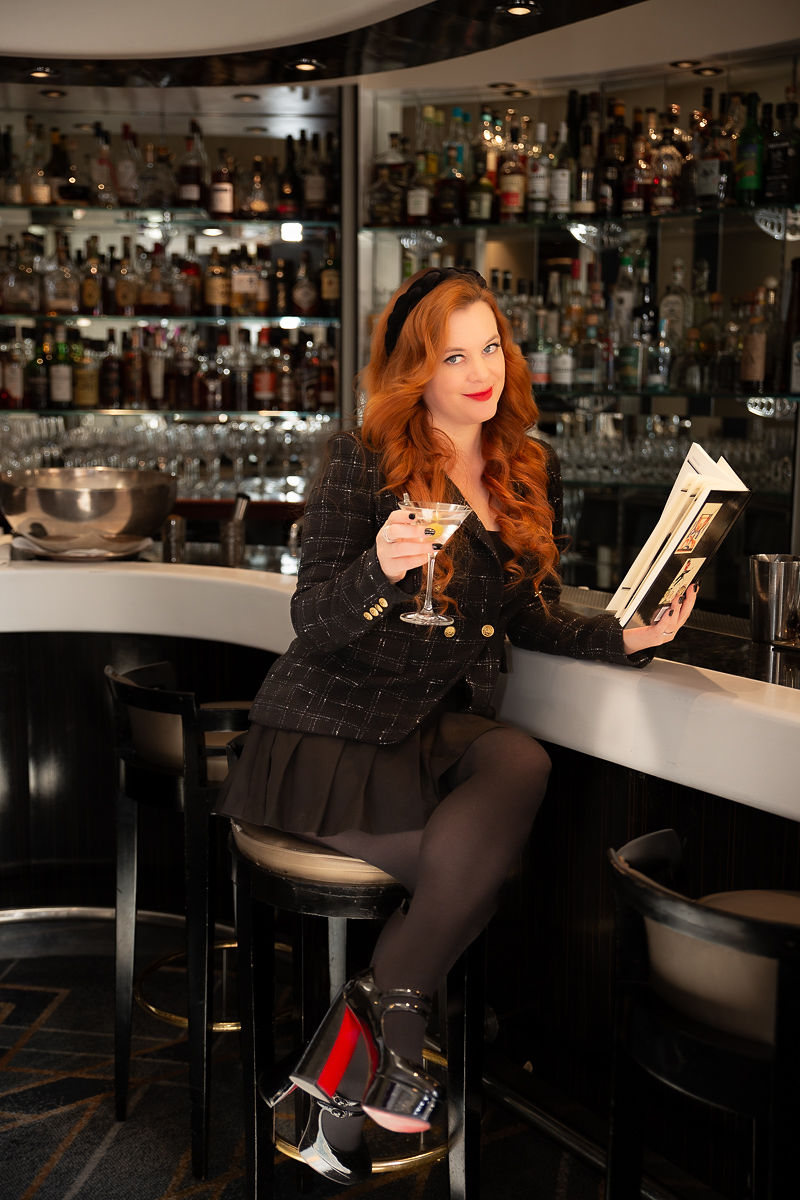
About the Author
Brisa Carleton
Brisa grew up in the Pacific Northwest before moving to Midtown Manhattan to turn her passion for musicals and “flair for the dramatic” into an award-winning career as a Broadway producer. Three Tonys later, she’s worked on numerous productions including Hamilton, Beautiful, and Moulin Rouge. In 2019, at the request of HSH Prince Albert of Monaco, Brisa joined his foundation to lead philanthropy efforts in theater, dance, and film on behalf of his mother, Princess Grace Kelly. Most recently, she harnessed her entrepreneurial spirit to create “spirits,” launching Literati Spirits, a premium vodka crafted by book lovers for book lovers. She now spends her days traveling to literary destinations with a martini in one hand and a manuscript in the other, collecting stories with her husband Mark and her long-haired chihuahua, Mister Big. Learn More…