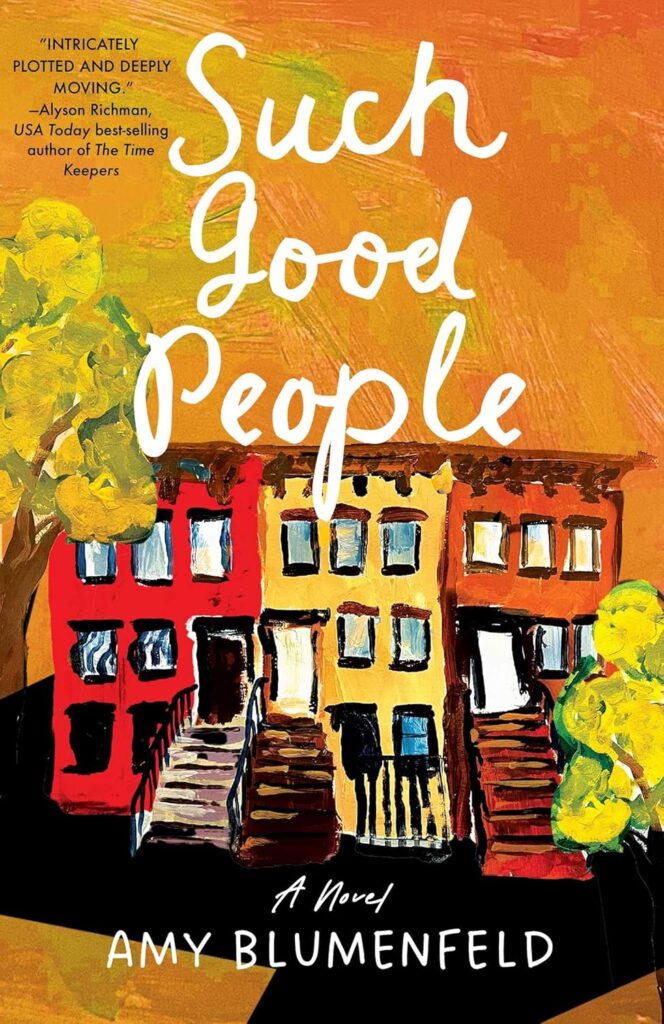
If you want to read a book that will tug at your heartstrings while simultaneously igniting your passion for justice, Such Good People, which releases today, is a book you need to add to your summer reading list. Set in between (now and then), aka present-day New York/Chicago and New York fifteen years in the past, we meet two friends, April and Rudy. The two neighbors were as close as any two best friends could be when they were growing up, but when April asks her friend Rudy to come to an event in Manhattan during a trip home from college, both of their lives are changed forever.
Get an inside look at the book (which is released today!) before you pick up your copy, either online or at your local bookstore.

First of all, thank you for writing such an amazing book. When did you first come up with the storyline for Such Good People?
I was raised in a home where a painting of the scales of justice and the words “Justice, Justice, Shall You Pursue” were prominently framed on our living room wall. My father began his career as a public defender, and when I was young, his colleagues would come over to our house and I’d listen as they prepared their cases around our dining room table. Later, when he became a judge, I’d sit beside my dad on the bench and observe arraignments from his vantage point. I learned to appreciate nuance, the complexity of situations, and understand that behind every docket number was a real human being. Most of the time, that human being had relatives and friends sitting on hard pews in the audience section, awaiting their loved one’s case. It didn’t matter if they were on the side of the defense or prosecution. Their angst-riddled faces were directly in my line of sight, and I couldn’t help but wonder about their lives. Their backstories. How being on the periphery of a criminal case impacted them.
After my first novel, The Cast, was published, I knew I wanted to write another book with childhood friendship at the heart, but somehow related to the criminal justice system. The problem was, I had no idea what that story would be. Then one day, I was invited to a fundraiser for a halfway house where a family friend was involved as an administrator. Although I wasn’t able to attend the event, I started receiving their newsletters and actually read the mail! In one issue, they profiled some teachers working for the organization.
Some had their own personal experiences being incarcerated and wanted to make a difference after prison by becoming educators and helping those newly released successfully transition back into society. Those teacher profiles were fascinating and helped inspire my main character, April. I knew April would be a teacher deeply committed to the reentry process…but why? Figuring out the “why” and her backstory was what led me to create Rudy, April’s best friend from childhood. I decided Rudy would be an upstanding person who made a questionable split-second decision while trying to help April. He paid a price. She paid a price, too. And it all snowballed from there.
The whole time I was writing, I had my dad’s courtroom on my mind, specifically the people in my line of sight in the pews during arraignments. I envisioned April and Rudy’s families and how a single choice by a good person thinking he was doing a good thing could spiral out of control and change all of them forever.
How has growing up in New York influenced your writing?
As a born and bred New Yorker, the city and greater metro area has undoubtedly seeped into my writing. I grew up on a very culturally diverse block in Queens with lovely people who were respectful, curious, and kind. The family next door immigrated from Italy and owned the pizza parlor around the corner. Their daughter married the son of the tailor across the street. Some houses had creche statues of the Virgin Mary on their front lawns, others went all out with their Chinese New Year décor, and we built a Sukkah in our driveway every autumn. It was out of a movie, and I loved every bit of it. I attended a small Jewish day school from kindergarten through eighth grade and then a city public high school with over a thousand kids in my class. My world growing up was simultaneously intimate and huge, and I think that feeling of a nurturing cocoon within a larger community is reflected in my books.
Are the places that the characters go to in New York real or imagined?
It’s a combination of both. For instance, the Coney Island Cyclone rollercoaster is real. The bagel store where April and Rudy work in high school is fictional but inspired by nearly every hole-in-the-wall bagel shop I have frequented, where the glass refrigerators along the wall are stocked with iced tea, whipped cream cheese, and amazing homemade tuna salad. The courtrooms are imagined, but certain details like the burgundy velvet rope separating the well from the audience section are lifted from my memory of the courtrooms where my dad used to work. The restaurant/bar where the crime scene takes place is completely imagined, but I visualized its location on the Upper West Side along a strip of similar restaurants/bars on Columbus and Amsterdam Avenues.
Tell me about the research that went into writing this book, which included delving into the inner workings of criminal law.
There was a lot of research that went into both the legal and medical aspects of the book. I had numerous telephone conversations, emails, and text exchanges with lawyers and doctors to make sure I got the details right. This was probably the hardest part for me – I wanted to make sure everything was authentic and accurate and that the chronology and terminology were on point.
Which storyline (April’s or Rudy’s) did you enjoy writing the most?
I genuinely enjoyed writing both storylines. April and Rudy offered different lenses to view the same situation, and I found it fascinating living inside both of their heads and seeing the world from each perspective.
Having written articles published in The New York Times, The Huffington Post, and O, The Oprah Magazine, in what ways do you consider yourself similar to the character of Jillian?
Ooh, I hope not at all on a personal level! But if I had to pick one professional aspect, I suppose it would be her affinity for research and strong observational skills. I didn’t wear a “fly on the wall” costume for Halloween the way she did as a child, but I certainly notice small gestures and details just like Jillian and actually enjoy the surprise and adventure of going down a rabbit hole when it comes to research.
What was the most difficult scene for you to write?
The bar fight scene. I needed to be very deliberate and precise with every gesture made by Rudy, April, and Bailey because that scene laid the groundwork for both the medical and legal aspects that followed.
Did you always plan for things to work out the way they did between April and Rudy?
Yes. When I started writing the novel, I knew what the status of their relationship would be at the end of the book; I just wasn’t sure how I would get them to that point. It took some time, but eventually I figured it out.
Are you working on your next novel, and if so, can we get a sneak peek?
Yes, I am! Just like The Cast and Such Good People, friendship is at the heart of the story. That’s all I can share for now!
About the Author
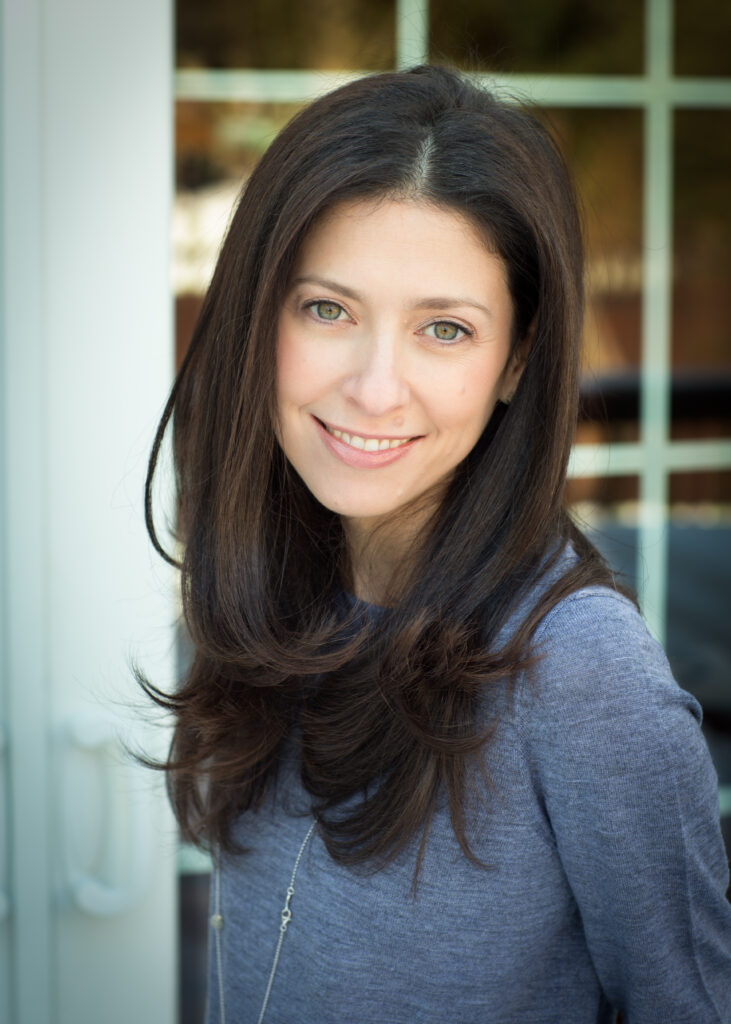
Amy Blumenfeld
Amy Blumenfeld grew up in Queens, New York. She is a graduate of Barnard College and the Columbia University Graduate School of Journalism where she received the James A. Wechsler Award for national reporting. Her essays and articles have appeared on the cover of People, in The New York Times, The Huffington Post, O, The Oprah Magazine, as well in George where she worked as a staff editor and writer. Amy’s debut novel, The Cast, was selected as a New York Post Best Book of the Week and named Winner of the Independent Publisher Book Award in Popular Fiction. She has also been a contributing author to a best-selling anthology and two non-fiction books. Amy lives in New York with her husband and daughter.